It is one of the events that new faculty do to integrate into the department. This particular one comprises of newly hired faculty, graduate students, the department chair and a handful of senior faculty. We take turns introducing ourselves including our names, classes we teach and research focus. The latter makes me nervous because I am at the tail end of a 3-year project and unsure of the next research interest.
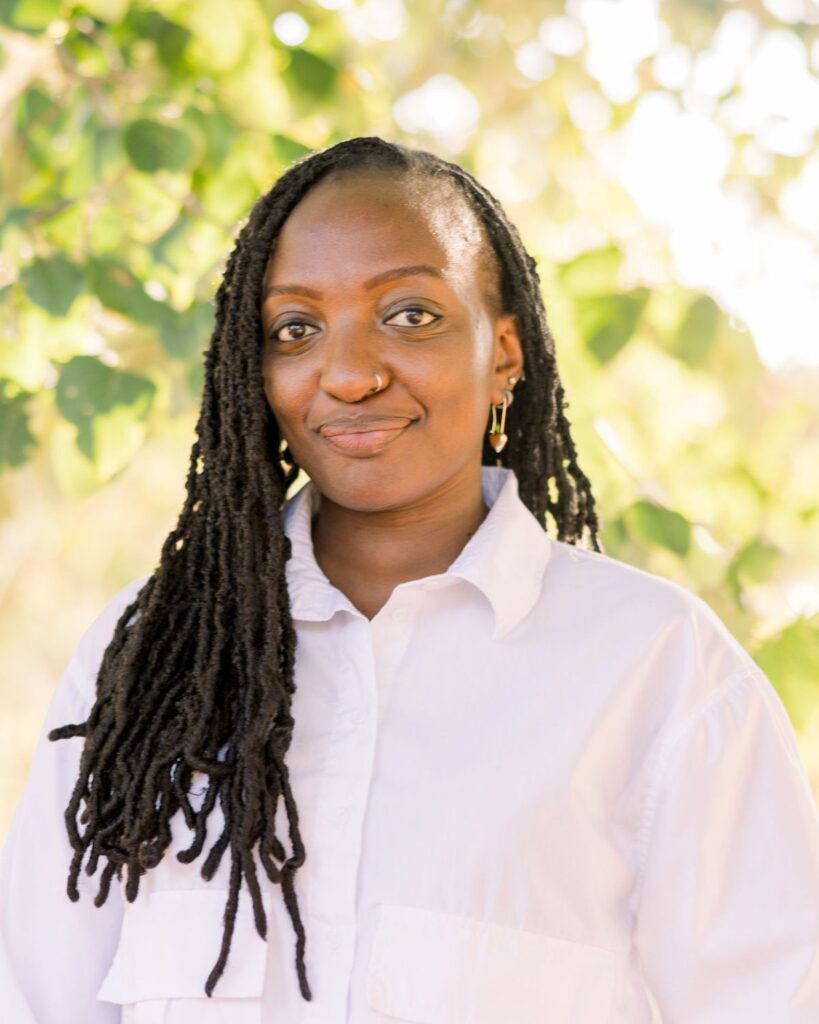
“My name is Medrine Nyambura, an assistant professor with the department. I teach classes focused on digital storytelling, specifically an introduction class that is open to students from all majors and an advanced digital storytelling class that focuses on bigger projects that students work on for the entire semester.
My research area…I just wrapped a 3 year project where we created an interactive video platform that provides sexual health education to New Americans, also known as children of immigrants, from East Africa. I was the lead creative on the project and this past fall we finished testing with our target audience and the tool proved useful.
Looking forward, I would like to do some storytelling around international students. Currently it is in the brainstorming phase but I think there is merit to looking into international students experiences.”
The hope is that I sound more confident than the lump in my throat that threatens to choke me. Part of the insecurity stems from the expectation of being the principal investigator as opposed to serving as a creative on a research team with a PI. The other is the mental shift of adjusting into a system that has centuries’ old structures that are a stark contrast from the media industry machine.
Two months later, the first interview happens and some of the insecurity begins to wan off because not only is there merit in telling the stories but there is a wealth of untapped experiences. The second interview stops halfway because there is an allegation that would need legal considerations. After listening to the story off the record, the participant opts out of sharing that part of their story. Within two months, I am handling release forms, conducting interviews, doing follow up interviews and finding replacements for the participants who drop off.
What begins as nervous attempt of processing my international student experience, morphs into a community of much needed camaraderie of a time where the days were long and the years short. The dilemma of being a graduate student is straddling the world both as an adult and student while also in professional training. The added layer of being an international student adds the pressure to unlearn and relearn within unfamiliar structures. Time spent in graduate school is short enough to give the illusion that you can bounce back into the world, a façade that shutters when one re-enters society. In other cases, being in graduate school for years can be deceptively familiar until life beckons again. Academic Asylum seeks to highlight the challenges of being an international graduate student and identify areas that schools and communities around them can support these students.In the end, 11 women from all over the world share their experiences of navigating the U.S. higher education system in a 6-episode serial podcast that is available where you get podcasts including Spotify, Apple Podcasts and iHeart Radio.